The Monty Hall problem: playing with probabilities
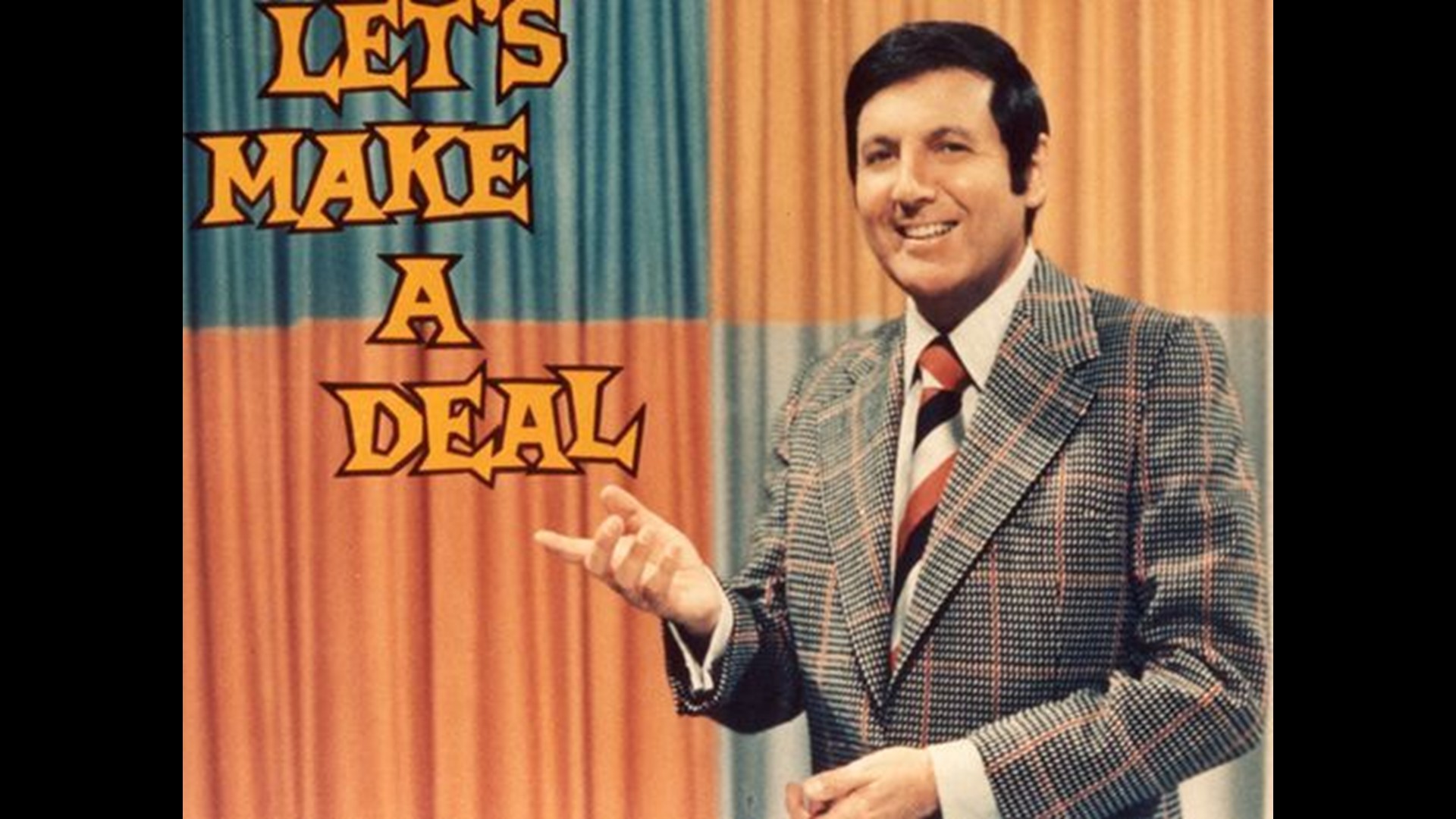
The puzzle is named after Monty Hall, the longtime host of the American TV game-show Let's Make a Deal. In the show a contestant was offered a choice among three closed doors:
- Behind one door was a valuable prize (originally a car).
- Behind the other two doors were "goats" – undesirable consolation prizes.
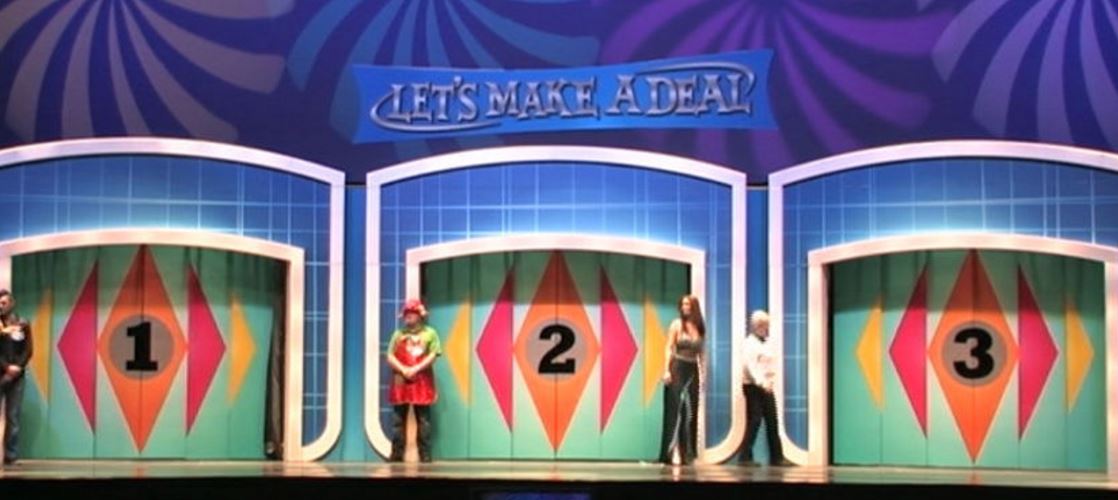
After the contestant made an initial pick, Monty – who knew what lay behind each door – would always open one of the remaining doors that hid a goat, then give the contestant the option to stay with the original choice or switch to the other unopened door.
The paradox arises because many people intuitively feel that, after one losing door is revealed, the odds should be \(\frac{1}{2}\)-\(\frac{1}{2}\), but the mathematically correct answer is that switching doubles the chance of winning (from \(1/3\) to \(2/3\)).
The problem entered the popular consciousness in the early 1990s when Marilyn vos Savant published the puzzle in her Ask Marilyn column (1990), sparking a massive public debate and numerous newspaper articles.
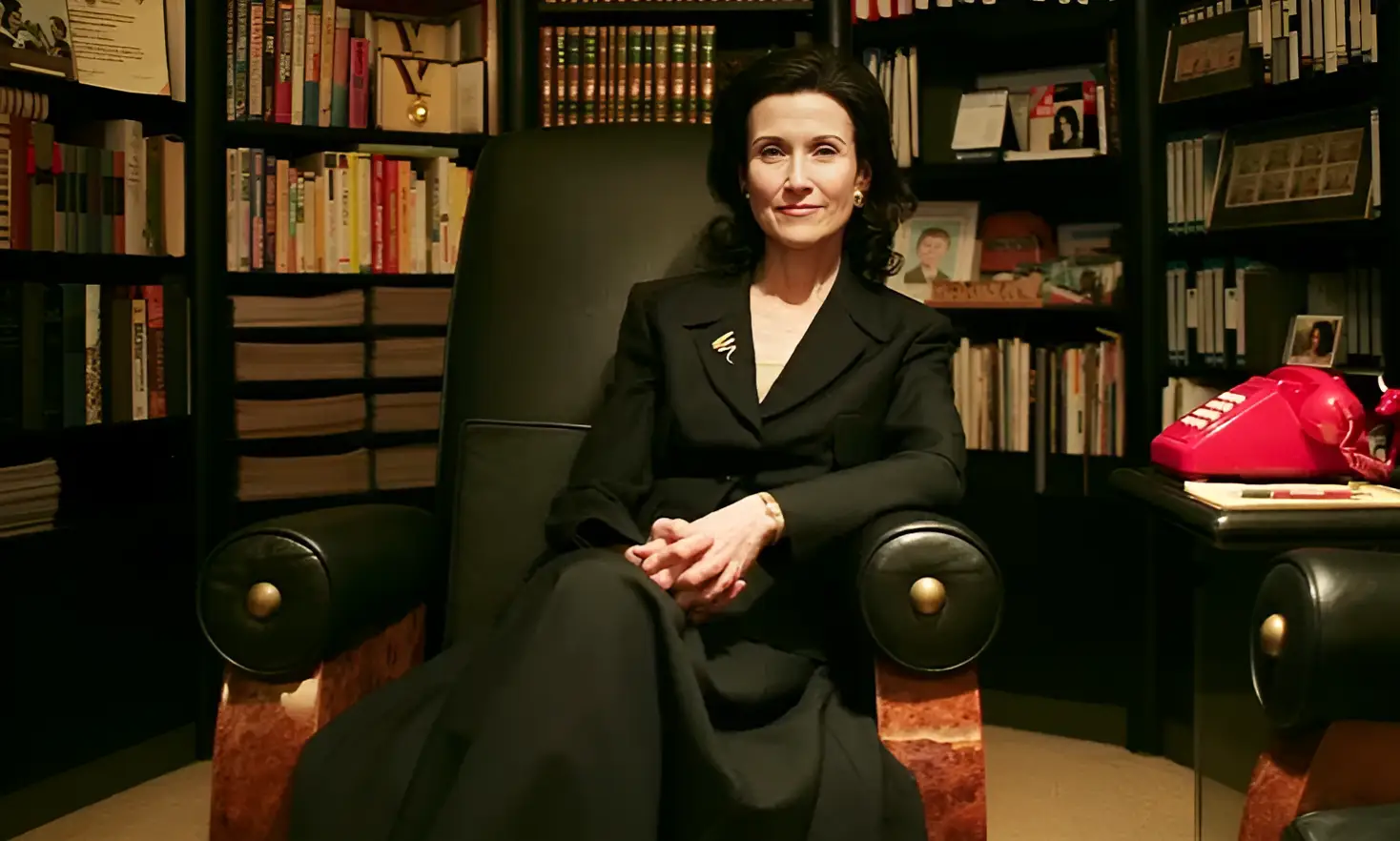
Figure 1: Photo of Marilyn vos Savant, was listed in the Guinness Book of World Records under "Highest IQ" from 1985 to 1989, with IQ of 228.
Formal statement of the problem
There are three doors: behind exactly one door is a prize (e.g., a car); behind the other two are goats.
- The contestant picks one door, but it remains closed.
- The host, who knows where the prize is, always opens one of the two doors the contestant did not pick, revealing a goat.
- The host then offers the contestant the choice: stay with the original door or switch to the only remaining unopened door.
Assuming the contestant follows a fixed strategy (always stay, always switch, or random), what is the probability of winning the prize under each strategy?
Key assumptions (often omitted in informal versions, but essential for a correct analysis):
- The host never opens the door with the prize.
- If the contestant's initial pick is already the prize, the host selects randomly between the two goat doors to open.
- The host always offers the switch; he never declines to open a door.
Detailed resolution
What is wrong with the \(1/2\)-\(1/2\) strategy?
After the host reveals a goat, only two doors remain closed, so many people reason that the prize must be equally likely behind either door \(1/2\) chance each.
This reasoning treats the host's action as if it provides no new information, which is not true because the host's behavior is conditional on his knowledge of where the prize is.
Formal probability calculation
Let us denote:
- \(C\): the door initially chosen by the contestant.
- \(P\): the door that actually hides the prize.
- \(H\): the door opened by the host (always a goat).
We want to calculate
\begin{equation} \label{eq:1} \mathrm{Pr}(\mathrm{win}|\mathrm{strategy}). \end{equation}Always stay strategy
The contestant wins only when the initial choice was correct:
\begin{equation} \label{eq:2} \mathrm{Pr}(\mathrm{win}|\mathrm{stay}) = \mathrm{Pr}(C = P) = \frac{1}{3}. \end{equation}No further conditioning is needed because the host's action does not affect the event \(C = P\).
Always switch strategy
The contestant wins when the initial choice was incorrect (i.e., the prize is behind one of the two doors not chosen). In that case the host is forced to open the only remaining goat door, leaving the prize behind the other unopened door, which the contestant will switch to.
\begin{equation} \mathrm{Pr}(\mathrm{win} | \mathrm{switch}) = \mathrm{Pr}(C \neq P) = \frac{2}{3}. \end{equation}To see this more explicitly, enumerate the three equally likely placements of the prize:
| Prize door | Contestant’s initial pick | Host’s possible opening (goat) | Door left after host opens | Result if contestant switches |
|---|---|---|---|---|
| 1 | 1 (correct) | 2 or 3 (random) | the other unopened door | lose (switches to goat) |
| 2 | 1 (wrong) | 3 (forced) | 2 (prize) | win |
| 3 | 1 (wrong) | 2 (forced) | 3 (prize) | win |
Random strategy (stay or switch with equal probability)
If the contestant flips a fair coin after the host’s reveal, the overall win probability is the average of the two deterministic strategies:
\begin{equation} \label{eq:3} \mathrm{Pr}(\mathrm{win}|\mathrm{random}) = \frac{1}{2} \left( \frac{1}{3} + \frac{2}{3} \right) = \frac{1}{2}. \end{equation}Thus a random decision restores the naive \(1/2\) intuition, but it is suboptimal compared with always switching.
Why the host’s knowledge matters
The crucial point is that the host's action is not independent of the location of the prize. By always revealing a goat, the host eliminates one losing option without altering the probability that the prize lies behind the other unopened door. Consequently the posterior probability that the prize is behind the originally chosen door stays at \(1/3\), while the probability that it is behind the remaining door rises to \(2/3\).
A useful way to see this is via Bayes' theorem.
Let \(S\) be the event "host opens door 2". We compute the posterior probability that the prize is behind door 3 given \(S\):
\begin{equation} \label{eq:4} \mathrm{Pr}(P=3|S) = \frac{\mathrm{Pr}(S|P=3) \times \mathrm{Pr}(P=3)} {\sum_{i=1}^{3} \mathrm{Pr}(S|P=i) \times \mathrm{Pr}(P=i)}. \end{equation}Because the host never opens the prize door, \(\mathrm{Pr}(S|P=3) = 1\), (if the prize is behind 3, the host must open 2). If the prize is behind 1 (the contestant’s original pick), the host chooses randomly between 2 and 3, so \(\mathrm{Pr}(S|P=1) = \frac{1}{2}\). If the prize is behind 2, the host would never open 2, so \(\mathrm{Pr}(S|P=2) = 0\).
Plugging the prior \(\mathrm{Pr}(P=i) = \frac{1}{3}\) yields:
\begin{equation} \label{eq:6} \mathrm{Pr}(P=3|S) = \frac{1 \times \frac{1}{3}}{\frac{1}{2} \frac{1}{3} + 1 \frac{1}{3} + 0 \frac{1}{3}} = \frac{2}{3}. \end{equation}Take‑away
- With the standard rules (host always reveals a goat and always offers the switch), always switching gives a \(2/3\) chance of winning, twice the chance of staying (\(1/3\)).
- The apparent \(1/2\)-\(1/2\) intuition ignores the informational content of the host’s deliberate action.
- Understanding the problem hinges on recognizing that the host's behavior is conditioned on hidden information, which reshapes the posterior probabilities.
Feel free to explore extensions (more doors, different host behaviours) – the same Bayesian reasoning applies once the exact rules are spelled out.